Fake Matrimony Profiles: How to Spot Them and Search Safely
Fake matrimony profiles are common on open sites. The warning signs, what real verification looks like, and what to do if something feels wrong.

Key takeaways
- A confirmed phone number is the weakest form of verification and proves almost nothing.
- Real verification matches a face to an identity and checks the claim, with a person reviewing it.
- Run your own polite checks on service, workplace and marital history before families commit.
- Never send money or identity documents, and report a suspected fake at once.
Most people looking for a partner online have heard a story about fake matrimony profiles: an invented job, a borrowed photo, someone who was never who they claimed to be. The warning signs are easier to spot once you know them, and so is the difference between a site that confirms a phone number and one that checks who you are.
Fake matrimony profiles are not always elaborate. Some are a stolen photo and a made-up job title. Others are built over weeks, with a believable family, a polished LinkedIn page and a reason the person can never quite manage a video call. Whoever is behind them is counting on you not checking.
Warning signs of fake matrimony profiles
In the profile
- Photos that look professional or appear elsewhere online. A reverse image search with Google Lens takes about a minute.
- Grand claims about job title, income or family with nothing to back them up.
- Details that do not sit together: a very senior post at an age that seems too young for it, or a city that keeps changing.
- A thin profile with very polished photos and almost nothing about daily life.
In the conversation
- Pressure to move the conversation off the platform quickly, usually to WhatsApp.
- Reluctance to speak on a video call or meet with family involved.
- Stories that shift: a posting in Lucknow last week, Bhopal this week.
- Talk of love or marriage within a few days.
- Any request for money, for any reason.
Claims of being a civil servant deserve a particular mention. They impress families, which makes them popular with people who are lying. A real officer will tell you their service, batch and cadre without fuss, and will expect to be asked. If the answers are vague, or change between conversations, treat that as a warning. A fake officer profile on matrimony sites leans on the title and goes quiet on the details.
What would you do?
When you see a “verified” badge, what do you assume it means?
What real verification looks like
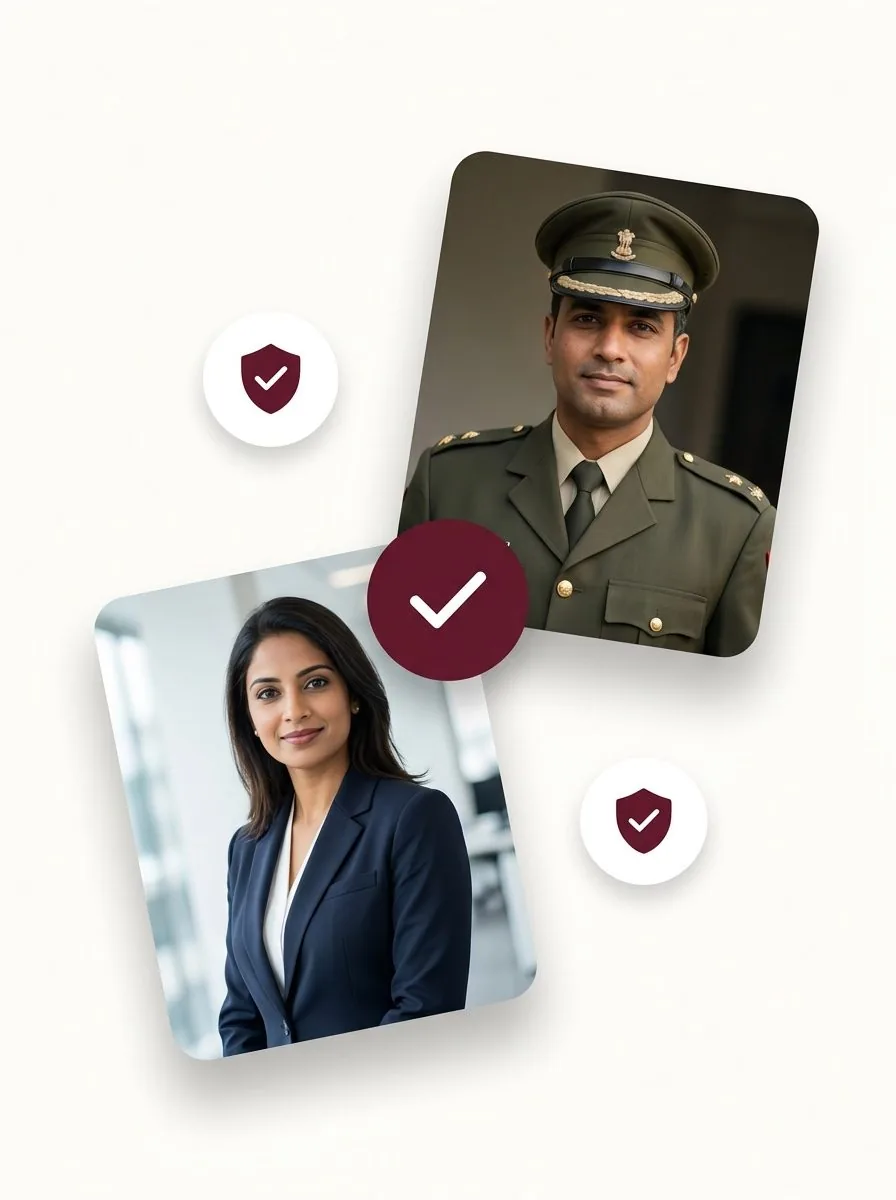
How matrimony apps verify profiles varies widely. Many sites call a profile verified once a phone number has been confirmed. That proves someone has a SIM card and very little else. Meaningful verification checks identity, checks the claims that matter, and involves a human who looks at the evidence.
On Officer Saathi, every applicant adds one document that shows they qualify (for example a service ID card or posting order for officers, or salary, business or net-worth proof for professionals), confirms who they are on DigiLocker, and takes a live selfie. DigiLocker supplies the name, date of birth, gender, address and photo as the government holds them, so the team can check a profile against a government record.
The selfie asks the person to look at the camera and copy two random poses, which a downloaded photo cannot do. A person on our team then reviews the application and decides, usually within a few days. You can read the full process on the page about our verified matrimony app and how it checks every member.
Only the verification team sees these documents; other members never do. The selfie and DigiLocker photo are deleted 90 days after the decision.
Privacy protections to look for
Verification is the first filter against fake matrimony profiles. Privacy settings limit the harm if someone unpleasant does get through, whether their profile is fake or genuine.
- Profiles visible only to verified members, never to the public or to search engines.
- Phone numbers hidden, and no contact details allowed in profiles.
- Screenshots blocked, so photos cannot be copied easily.
- Messages only after both people accept.
- A clear way to block and report, read by a real person.
Safe first meetings
- Talk on a video call before you meet. Ten minutes on video settles more than a week of messages.
- Meet in a public place for the first few times, and tell a family member where you are.
- Arrange your own transport.
- Involve families before any commitment, as most Indian families would anyway.
If someone keeps finding reasons to avoid a video call, stop there. Women searching on their own will find more on common scams and polite background checks in our guide to matrimony safety for women.
What if…
What if a match says he is an IAS officer but stays vague about his cadre and posting?
Questions to ask any matrimony platform
- Who checks each member, and is it a person or only software?
- What documents are checked, and who can see them?
- Can strangers message me, or only people I accept?
- What happens when I report someone?
- Can people without an account, or search engines, see my profile?
- How long do you keep my documents and selfie?
A platform that answers these plainly on its own website has usually thought about them. A “verified” badge with no explanation behind it deserves the same scepticism as an unverified profile.
If something feels wrong
Matrimony fraud in India tends to follow a familiar pattern: weeks of attention, then a sudden emergency, a customs fee for a gift or a frozen bank account. Trust your instincts. Stop the conversation, block the person and report them to the platform. Never send money or share documents with someone you have not met; copies of Aadhaar, PAN or a passport are valuable to fraudsters, and no genuine match needs them. If you have already lost money, report it quickly to the police or on the national cyber crime reporting portal. On Officer Saathi, every report is read by a person and kept confidential, and our safety centre explains how to get help.
Questions, answered briefly
Does Officer Saathi check every member?
Yes. Every applicant adds a document showing they qualify, confirms their identity on DigiLocker and takes a live selfie, and then a person reviews the application before the profile goes live.
Who sees my documents?
Only our verification team. Other members never see them. Your selfie and DigiLocker photo are deleted 90 days after the decision on your application.
How can I spot a fake matrimony profile?
Watch for photos that appear elsewhere online, big claims about job or income with nothing behind them, pressure to move to WhatsApp, excuses to avoid a video call and any request for money. A story that changes between conversations is another sign.
How do I report a fake profile?
Stop replying, block the person and report the profile on the app or site where you met. On Officer Saathi a real person reads every report and reports are confidential. If you have lost money, report it to the police or on the national cyber crime portal as well.
Did this help?
Comments